Showing posts with label Ray Paulick. Show all posts

Wednesday, March 21, 2012

Paulick, PETA and racing 'Luck'

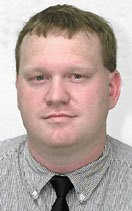
Ray Paulick has done an admirable job today of trying to separate the truth from the animal-rights movement fiction about the cancellation of HBO's horse racing-based drama "Luck."


I was greatly enjoying "Luck." It was the only series on television I faithfully watched every week. I was even further impressed by the dedication to the production and its fans displayed by cast members John Ortiz (@johnortiz718), Tom Payne (@justanactor) and hall-of-fame jockey Gary Stevens (@HRTVGary), who routinely interacted with viewers and participated in a weekly #LuckChat on Twitter.


When news broke that a third horse associated with "Luck" had died at Santa Anita, there was concern among the show's fans that it wouldn't survive the negative publicity. That proved true when public pressure -- largely fueled by People for the Ethical Treatment of Animals -- was apparently too much for HBO to bear. The series was canceled.


Ray has tackled the task of unmasking PETA as one of the least ethical major charities in America. And when it comes to PETA, I'm not certain there could be a less-reputable group in America being treated by the media as though it IS reputable. I spent 20 years as a journalist and have been appalled that the healthy skepticism typically directed toward nearly every source is so often completely absent when reporters speak with PETA. I can only think of two reasons.


1. PETA is so impassioned in its position and so polished in its theatre that journalists are too readily convinced the vehemence and varnish with which the PETA message is delivered equates to veracity. ("They seem so informed and insistent; it must be true!")


2. Journalists have an admirable, but sometimes misguided, commitment to "tell both sides" of the story. That's great when both sides are making potentially valid points. It's a disservice to readers when one side is peddling propaganda that at best is loosely based in truth, at worst is often complete fabrication. When PETA is the first, loudest and most reliable "other opinion" for an animal-related story, it's too easy for a busy (or lazy) journalist to just take PETA's quotes and run with them.


For the record, PETA sneaks around. PETA twists the truth. PETA outright lies. PETA hypocritically scolds people for mistreating animals and "kill" shelters for engaging in euthanasia, while a study of PETA records shows the organization euthanizes 95 percent of the stray dogs and cats it takes in. In 2011, PETA's Virginia headquarters killed more than 1,900 dogs and cats, finding new homes for only 24. Charity Navigator shows PETA collecting $35 million in revenues last year and spending 85 percent of that on "programs," but when PETA kills almost every animal that comes into its "care," what sort of "programs" could those be? (Answer: Huge advertising campaigns, publicity stunts, lobbying, hiring staff (including convicted eco-felon Gary Yourofsky), euthanasia, financially supporting ecoterrorists like firebomber Rodney Coronado, and staging its "covert investigations" into cruelty wherever it can be found -- or merely imagined.) PETA would rather you or your children die than that your life be saved through medical research that involved animals.


Humane treatment of animals is moral and right. Taken to PETA's extremes, the notion becomes insanity. But as Penn & Teller tell us in their own "Bullshit!" episode exposé of PETA: "In any conflict, the crazier party usually wins ... which is why PETA is doing so well." (LANGUAGE WARNING: Don't view the Penn & Teller link if you have sensitive ears.)


The horse racing industry should never do anything -- NOT ONE THING -- merely to appease PETA, and neither should Hollywood. (Fat chance of the latter.) PETA is not a reasonable and grounded critic of the industry; it is not a trustworthy partner in affecting appropriate change. Horse racing, Hollywood, the restaurant business or any animal-ag business trying to work with PETA would be like offering the scorpion a ride across the river on your own back.


So if change needed to take place on the "Luck" set, or if cancellation was the only option, it should have been for valid reasons far beyond the simple fact that PETA was predictably flipping its collective wig.


Anyone who questions the ability of PETA itself or animal rights activists in general to take extreme positions unfounded in fact -- even sanity -- should read the comments under a story at the Today Show Web site this afternoon. It is being described as "abuse" and the dog "living in hell" for a 4-year-old goldendoodle to be employed as a service animal for a 3-year-old girl who must be tethered to oxygen. (The dog carries two bottles in a specially designed vest when the pair go out to play.)


Needless to say we can't be blind to the racing industry's troubles nor deaf to all criticism. The industry has serious horse-welfare issues that must be addressed.


But offhand I'd suggest there are four general "camps" when it comes to undertaking, observing and judging this effort. Two of them are serious problems; a third is our primary audience and challenge.


First, there are racing industry professionals who believe nothing is wrong with the sport. Whether through selfishness or merely wishful thinking, they believe no ban of race-day meds is necessary, no extra effort or thought given to the pursuit of safer racing for the horses. These people are the industry's biggest impediment to necessary progress. Their culture and obstructionism have clearly proven difficult, sometimes impossible, to overcome in the past.


Second, there are the industry professionals and fans who ardently believe in and support horse racing, but who equally believe that the humans involved must make every reasonable effort to protect the equine athletes. If we love and value these animals, we should always treat them accordingly. Good ideas for improving horse welfare will come from this sector; so must the energy and the sheer force of will to achieve them in the face of opposition within the industry itself.


Third, there are PETA and vocal animal rights activists. Frankly, there's nothing racing can do to appease these people. Ever. Regardless what we say or do, they are the antithesis of "preaching to the choir." Our goals as racing's advocates are to give them as little ammunition as possible for their attacks, and to provide accurate information that hopefully keeps this can of mixed nuts from poisoning the fourth group.


And that fourth group is by far the largest -- those ranging from casual fans to non-fans who are completely disinterested in the sport, but who don't want to see animals abused or needlessly suffer. These people do NOT believe (as PETA founder Ingrid Newkirk once said) that "a rat is a pig is a dog is a boy." Most of them will eat the surf and turf. They own cats and dogs and hamsters and parakeets. They have their human-animal priorities pretty well in order. And they comprise, I'm guessing, at least 80 percent of everybody.


Billy Martin once noted that on any baseball team there will be a couple of players who hate you, a couple who would do anything for you, and the rest are undecided.


"The secret of managing," Martin said, "is to keep the guys who hate you away from the guys who are undecided."


And in a very real way, that's the secret of managing horse racing's image and trying to reverse the downward trend in its fan-base in the 21st century. Those of us who would do anything for the good of horse racing need to be the agents of progress in the sport and the buffer of truth that separates the vast majority of moderately interested and disinterested observers from the agenda-driven animal rights zealots who won't stop until there's not a single horse left being raced, nor dog carrying oxygen bottles, nor beef placed on a bun.


PETA alone will never have the power to shut down horse racing. But a willfully and woefully misinformed general public who are eventually provoked into crying out to everyone from the networks and advertisers that carry and sponsor racing to state legislatures and Congress that can crush us under the weight of government, just might.

Saturday, July 18, 2009

Jokes by the humorless: The 'OMG' saga


With 24 hours or so to reflect on the oh-so-slight Internet phenomenon (within the horse racing world only) that one post of mine has become, I'm compelled to try and wrap it all up in a tidy package with ribbon and a bow and set it aside. But I'll admit, bows are for decoration only, and a little tugging at the ends later could result in reopening the box.

I'm more than willing to believe that Ron Mitchell, who writes the "Tracking Barbaro's Brothers" blog at bloodhorse.com, was making a joke when he relaxed his journalistic formality for a moment (as we all do occasionally) and clacked-out the headline "OMG! Nicanor Scratched Due to Leg Injury when reporting the scratch of Barbaro's baby brother, Nicanor, from today's Virginia Derby.

Whether I wasn't amused is a result of my just being dumb that way, or the joke's being a clunker, or a measure of both, I'll leave for you to judge for yourselves.

And I know quite well that jokes by journalists -- even jokes by comedians -- sometimes land with a thud.

Sometimes readers just don't get it. Writing for a general audience as I do daily, attempts at humor can't be too obscure or you're leaving the bulk of your readers on the outside of an inside joke. That's frustrating at least for the reader; it can even become offensive.

A well-written, prudently timed and carefully calculated joke agitates primarily those who were its butt, and they're usually madder the more they had it coming.

The very worst of a writer's jokes are those that offend most everyone. Or those that end up turning the joke on the writer.

Clearly I lobbed the joke back toward that venerated publication, and in a way that seems to have been more amusing to readers than was the original joke, posed as a headline.

Comments on my earlier post, and some readers in private e-mail to me, have suggested that the Blood-Horse knows good and well the type who usually frequent the "Barbaro's Brothers" blog. Its audience is composed of Barbaro fanatics (duh, I guess), some or even many of whom are youthful, female and perhaps don't care much, if at all, about horse racing otherwise.

Having read some of the comments over there -- and there are usually lots of comments on that blog, though often from the same users -- I think there could be some truth to that theory.

And certainly some Blood-Horse patrons have no use for the "Barbaro's Brothers" bit.

Wrote "TomasinNM" responding to my prior post: "The Bloodhorse recently sent out a survey to ascertain I assume, where they could improve. ... One of my comments dealt with the blog issue -- it seems that they're pandering to 13 yr. old horse-crazy girls. Good grief."

Other, anonymous posters here suggested the blog moderator screens out any comments from those who might poop on the "12-year-old" Friends of Barbaro party. (Though some posts he or she mentions being ignored or deleted, such as one comparing Barbaro's and Nicanor's injuries now seem to be present ... a change of heart from reading comments over here? Still, other critical posts that were mentioned, are not.)

"If you like the Nicanor saga (zzzz), this was actually a two-sided blog before a new moderator took it over," that person wrote on my blog. "... Now it's but hearts and flowers with NO racing interest, or knowledge. ... It's a joke, and real race fans know it."

Well, not everyone agrees. At least one person thought I was unfair -- among other things -- in making fun of the Blood-Horse's treatment in blog form of the Nicanor scratch.

The commenter who took me to task for my comic criticism of the Blood-Horse fired off a few personal shots about my writing here lacking creativity and substance. That's fine; I think he's wrong, but I was taught not to dish it out if I can't take it, and I'm a big boy (a very big boy) who has learned to withstand criticism. Turnabout is fair play.

But how about the Blood-Horse? According to that critic, the "OMG" headline was posted as an attempt at sarcastic humor, so when I in turn crack wise about the headline, where's their own sense of levity? ... Even Nixon could play a credible straight man on "Laugh In."

Former Daily Racing Form bloodstock editor Sid Fernando, now president of ematings.com, speculates that my critic was Blood-Horse President and CEO Stacy Bearse. (Note for the sake of full disclosure that Fernando has his own issues with Bearse, and is very open with his disdain.)

The critic being Bearse makes sense, because the poster also took an unwarranted and somewhat non-germane swipe at Ray Paulick and his independent racing news and content aggregation site, paulickreport.com. Much as newspapers are at odds with Google over aggregation, and considering Paulick's site is garnering thousands of user visits daily and cashing a few precious racing industry ad dollars in a weak economy (a huge concern of Bearse's), in part by linking to Blood-Horse content, the frustration of Paulick's ex-boss is practically palpable. And Bearse when prodded is known to be a loose cannon at the keyboard.

(A brief aside here: An e-mail like that one apparently from Bearse to Paulick -- if sent by me to anyone, particularly to a former employee whose personnel records and privacy I'm obliged to safeguard and respect -- would have gotten me fired on the spot.)

But it isn't Stacy Bearse -- if he does happen to have been the harsh critic -- that has intrigued me the most since comments on my post started coming in yesterday. It was the very first response in the thread; the one whose contributor I can no longer track because my Sitemeter counter was (emphasis on "was") the free variety, and only maintained information on the last 100 visits.

Others have hinted that this author's comments also originated in-house at the Blood-Horse. I can't research or prove it, but I do wonder.

That writer chided me a bit for not being in on the "OMG" joke. But it's impossible to miss the animus toward the blogosphere itself -- I'm guessing specifically the Thoroughbred Bloggers Alliance posts that now are, by some sort of agreement, also imbedded at bloodhorse.com to help drive traffic and justify advertising rates.

The post reads: "I don't know if you caught the irony that the Blood-Horse is well aware of what a joke these nutty people are to the industry -- certainly not to themselves, as they are too obsessed to realize they are embarrassing. They do bring hits to the Bloodhorse.com site, however, so Blood-Horse is very happy to feed the fire, all the while joining in the snickering at these fools."

Whether that author is in-house at bloodhorse.com or not, the implication is that the Blood-Horse doesn't take blogging (or specifically TBA bloggers?) seriously, and by extension, could also not really respect the users who visit bloodhorse.com specifically to read those blogs. They're probably all "nutty ... fools" whose embarrassment must be suffered in order for bloodhorse.com to pay the bills. But it's OK, because the Blood-Horse is laughing at them, too.

I'd love to know, though likely never will, whether that was written by a BH staffer. And exactly toward whom the writer's disdain is directed (all bloggers, some bloggers, only the people who read the "Barbaro's Brothers" blog?). But the negative sentiment is unmistakable.

On the topic of new media, blogging (to which I'm a newcomer), and the need to attract more and younger fans to horse racing, I happen to agree with one of my more recent commenters, who identified himself (or herself) as a journalist, though not of the turf variety.

"I must say ... that racing needs all kinds. Even annoying kinds," the individual wrote. "We have to take them wherever we can get them and if that means we get the Barbaro-obsessed types, then fine.

"I'm of the opinion that (part) of our job in the press ... is to find out what people are interested in, what they want to read, and (within reason) give it to them. ... If they want to read a gushy blog, then give them their gushy blog."

From a business sense, I largely concur. But then don't make fun of the reader for liking what you gave them.

The Critic-Who-Could-Be-Bearse wrote: "The Nicanor blog that had 'OMG' in the headline was an attempt at sarcasm. The people who follow that blog are pretty obsessed with anything Barbaro related, so it was an attempt at humor."

And that's where my bigger problem lies now with the joke in the blog headline. It wasn't just a clunker of a joke that I for whatever reason didn't appreciate. It was a joke seemingly aimed at -- rather than for -- the readers of the blog itself.

There's a not-so-fine line between laughing with your readers and laughing at them.

One is great for business. The other -- unless you're Triumph the Insult Comic Dog -- probably not so much.

Saturday, July 11, 2009

Breeders' Cup cuts would leave series incomplete

With new board members in place, the Breeders' Cup is considering cutting back in the future on its two-day slate of 14 races, suggesting that having so many divisions is just too darned hard to keep up with, for fans and for the series.

The series of win-and-you're-in races and other Breeders' Cup-affiliated stakes also would be culled in the process.

"The concern is, how do we lead into 14 different races, in 14 different divisions," Greg Avioli, CEO of the Breeders' Cup, told The Daily Racing Form. "It's very difficult to do with 14 divisions."

I find myself asking this a lot of the higher-ups in racing's hierarchy, but are they serious?

For me this is just the latest piece of evidence in the growing case that horse racing is being run by people who have forgotten what they're marketing, how to market it, or even to whom they should be marketing.

Ray Paulick was there to blog the whole thing and he seems to like what was said. And the notion of having a strategic plan is well and good. But I'm rarely one to back the concept of addition by subtraction.

Any horse racing fan -- even neophytes -- should be able to grasp that a true championship day of racing will have events for 2-year-olds and for older horses, on dirt (or some facsimile thereof) and on turf, at distances ranging from short, to medium, to long and very long. And, that those races will be held for both males and females.

Done right, that necessitates at least 14 divisions.

Juveniles at present are handed four races: colts and fillies, dirt and turf, all around two turns. There are no short races for 2-year-olds at the Breeders' Cup. And that still leaves only 10 more races over the two days for older horses, male and female.

With an open mile race on both dirt and turf, open dirt and turf sprints, plus the Breeders' Cup Classic, the Breeders' Cup Turf and the new Marathon (lengthened to a more serious distance this year at 14 furlongs), just three races are carded strictly for older females; a dirt sprint, the Don't Call It A Distaff and the Filly & Mare Turf.

Economics aside -- the quality and quantity of racing only being considered -- the smartest move the Breeders' Cup has made in recent memory was the addition of new races to support unrepresented divisions, such as the turf juveniles, sprinting females and horses whose pedigrees faintly hearken to the day when the Jockey Club Gold Cup was run at two miles. (The BC has fouled up the win-and-your in schedule, and by putting all the filly and mare races on Friday, but those are different blog posts.)

For the Breeders' Cup to go back on that commendable decision to serve all breeders and their horses, not to mention fans of distance and turf racing, and to ax races when they only just started to get it right, would be a huge mistake.

But that seems to be the direction the Breeders' Cup is headed. Last summer, the organization pegged Satish Sanan -- board member and owner of Padua Stables -- to lead a team in creating a new strategic plan. Work on the strategy began in January, aided by William Field, a British-based consultant for Value Partners, a management consulting firm.

The strategic plan for the future appears to have been to set up a rear-guard action and plot a retreat -- but a withdrawal so grand that the Breeders' Cup will become "the most prestigious and popular competition in world racing," according to Field.

Let's face it, competition for that title isn't very widespread. Aside from the historic Royal Ascot meeting -- where most American owners and trainers not named Wesley Ward fear to tread -- and Dubai World Cup day, exactly which other events are vying for the title of "most prestigious and popular competition in world racing?"

And considering Sheikh Mohammed has the bucks to drop £45 million on a 3,300-acre British farm with 39 houses, primarily to "use the grounds for shooting" -- and in six months will open the most spectacular new racetrack in the world -- it would seem the Breeders' Cup is already down in the count 0-and-2.

What the Breeders' Cup has going for it that nobody else can touch is the fundamental truth that around the world almost everybody who owns a racehorse -- Sheikh Mohammed bin Rashid al-Maktoum included -- wants to win big races on American soil. Even if only to win the competition of "us" vs. "them." Sure, they have marquee events in their own countries, and for most of the season those races keep the average overseas connections from shipping here to race. (Of course, Sheikh Mohammed has horses everywhere, all the time.)

But on Breeders' Cup weekend, they're all here, almost anyone who thinks his or her horse has a prayer of winning anything.

Field, the British consultant, concedes that's what it should be all about.

"The important thing is that the event in November is regarded as the event (horse owners) want to come to and there is nothing more that they would treasure than to win a race there," Field said.

So keep giving them races to win.

The fewer races, the fewer opportunities for horse owners to achieve that dream of a Breeders' Cup horse or -- praise be -- a Breeders' Cup champion. And, the fewer people who will be willing to make a downpayment on what for 99.99 percent of us is a pipe dream.

Breeders' Cup officials say the series will run a $6 million deficit this year, on total estimated expenses of $50 million. Of those expenses, $30.5 million is committed to purse outlays. (The Dubai World Cup offers $21.25 million in purses for just seven races and you can expect that to escalate at Meydan.)

Breeders' Cup expects foal nomination fee collections in 2009 to drop to $16 million from a total of $20 million in 2008; that's $4 million of the deficit in itself. But even mentioning the possibility of scaling back the number of races (not just on Breeders' Cup day, but the series' lower-level races nationwide throughout the year, races in which lesser connections have more of a chance) will only further discourage smaller breeders and stallion-owners from paying to nominate -- starting now, and not just when the cuts actually happen.

Face it -- fewer opportunities to win equals fewer people willing to pay the price of admission. I for one was thrilled with the prospect of the Marathon, hoping that as a small breeder it might be my best chance to someday have a Breeders' Cup horse without spending a mint for a fashionable sire who throws million-dollar 2-year-olds.

In the end -- what Breeders' Cup management doesn't even seem to get -- is that it isn't just about the money. It's about the dream. The snowball's chance. The faintest glimmer of hope for getting a horse to a Breeders' Cup race, even if it's "just" the $1 million Turf Sprint or the paltry $500,000 Marathon.

Of course, maybe it isn't about that if you're a millionaire, as I presume the preponderance of board members are, probably several times over. Maybe if you're in that financial echelon, the Breeders' Cup Classic isn't worth winning if it isn't a $5 million race.

But if money were the sole reason for running, wouldn't Jess Jackson be content to let Rachel Alexandra take a bite off that $2 million Ladies Classic apple, even if it's only around $500 large for second place to Zenyatta? Why does she run for the 60 percent winner's share of $300,000 in the Mother Goose, yet Jackson swears his filly will skip the Breeders' Cup at many times the financial reward because it will be run (for the second straight year) on Santa Anita's Pro-Ride surface, which he thinks puts Rachel at a disadvantage?

Seems to him it's more about the winning.

If money were the primary reason for sending a horse the Breeders' Cup, would the asking price reportedly being bandied about for a gelded Mine That Bird be in the vicinity of $4 million, a third more than the Kentucky Derby winner could even hope to earn from the Classic?

Seems as though posing for the win photo after a Breeders' Cup race is prize enough.

Obviously money makes the world go around, and perhaps no industry is more acutely aware of that than the horse business, where the yearling auctions are broadcast live on the Web and covered as extensively as some college football bowl games. Even so, the prices being paid by the high-end buyers don't correspond in the slightest with what the horse is likely ever to earn back at the track.

I mean, $16.7 million for The Green Monkey?

Sure, the breeding side of the business is where colt-buyers in particular hope to recoup their investment, via sky-high syndication deals.

But if you don't realize that the adventure between that sale purchase and the breeding shed -- the heady prospects of following your horse through 2-year-old maiden-breakers and stakes like the Hopeful and the Champagne, to the Derby Trail, to Churchill on the first Saturday in May, to Saratoga and Del Mar in the summer, to the Breeders' Cup and potentially seasons beyond -- is really what those buyers are purchasing for hundreds of thousands or even millions of dollars, then you have lost sight of what horse racing is all about.

It's hard to imagine that people so deeply involved in the sport could be so oblivious to its aura, but maybe they're too close to the game. Could be they've been around it too long, particularly those who are perennially at its pinnacle. Perhaps the spotlight is bright enough on the sport that the two-way mirrored windows of its ivory towers allow us to see in, but blind the people who run the game to the outside world.

Maybe they really don't know anymore what they're marketing, how to market it, or even to whom it must be marketed.

What you're selling, Breeders' Cup, is what every red-blooded American wants from his life and, in racing, what every horseman worldwide pines for -- just a chance. An opportunity to compete against the best and to show what he's got. An inkling that maybe, just maybe, his horse is in with a shot.

Every race cut from the schedule kills that dream not just for somebody somewhere, but for dozens and hundreds of somebodies everywhere.

I understand that in the eyes of some -- horsemen and fans alike -- not all of the current card's 14 races are created equal. It's O.K. that the Breeders' Cup Marathon will never carry the purse of the Classic. But the race needs to be there as the championship, the season's ultimate goal, for the type of horses it fits. It isn't the biggest race of Breeders' Cup weekend, but it's the biggest race of the year for them.

For the Breeders' Cup to be the championship thoroughbred racing event worldwide, there must be a race for every genre of racehorse: juveniles and elders, male and female, main track and turf, from short distances to the very long.

Anything less must be graded incomplete.

Tuesday, June 16, 2009

Paulick Report anniversary a time for celebration, contemplation

I noticed upon a visit to RaceDay360 that the "Paulick Report" is celebrating its first anniversary today. That's red-letter date, not just for Ray Paulick, former editor in chief of The Blood-Horse, who started his site after leaving that job, but also for all of racing journalism.

Paulick has noted that turf writing, as it's called, has long lacked the independence necessary to be a wholly reliable source of information on the industry. The Blood-Horse, for instance, is published by the Thoroughbred Owners and Breeders Association and thus controlled by a board of directors that also includes members of The Jockey Club; obvious potential conflicts of interest there.

Regardless of ownership, at many trade publications there is an ongoing struggle between journalists and, as Paulick calls them, "bean-counting publishers," over whether honest, sometimes by necessity critical journalism compromises the publication's ability to sell advertising to the very individuals and businesses the newsroom is covering. In the case of turf writing, those businesses include racetracks, stud farms, wagering sites and other horse- and racing-related concerns.

But in one year of his site, Paulick has proven that good, honest journalism can attract an audience, and doesn't completely repel advertisers.

In a brief item on the front page of his Web site, Paulick reported that in May his site saw 135,786 user sessions. That's an average of 4,380 per day. Some of those might be the same people returning to read new stories later in the day, but for a year-old "maverick" online publication, it's healthy traffic nonetheless.

And, Paulick's pages are smattered with advertising from key players in the industry. A quick glance this afternoon shows support from Airdrie Stud, Walmac Farm, Liberation Farm, McMahon of Saratoga, Werk's eNicks, Buck Pond Farm, Margaux Farm, Team Valor and TVG, among many others.

This advertising appears despite the fact that Paulick for the past year has reported extensively on troubles, squabbles or even outright scandals in the thoroughbred industry, ranging from extensive coverage of the Ernie Paragallo horse-abuse case, the furor created by the Breeders' Cup's December decision (later overturned) to ax its special stakes program supplements and how the Breeders' Cup's "old guard" and "new guard" have struggled behind the scenes for control of the series. He's joked about TOBA giving an award to its own Sales Integrity Division, and either he or his guest writers have tackled issues like drugs in racing, the antiquated tote system, and machinations in track management from Magna's mangling of its holdings to Churchill's power-play to push wagering through its Twin Spires account-betting system.

Most of that coverage you wouldn't see from the mainstream publications; at least not in the depth and with the honesty Paulick has provided.

In the interest of depth and honesty, I'll confide that I e-mailed Ray Paulick on June 11 wanting to discuss precisely these issues (and the market for independent turf writing) and I haven't heard back from him yet. I still hope to. I'm sure he's busy and he doesn't know me from Adam.

That stated, on the occasion of the Paulick Report's anniversary, for full depth and honesty I'll go on record with my one legitimate quibble about that online publication. Amid the mind-boggling array of dozens or even hundreds of links to Paulick's reporting and aggregated racing news stories and blog headlines is one link that gives me pause: "Donate to Paulick Report."

I hope Ray Paulick makes out well with his advertising sales and is richly rewarded for his renegade turf-writing efforts. But my personal journalistic code makes it difficult to accept "independent" and "donation" in the same conversation.

Advertising is a commodity. Even industry players who have quarrels with how Ray Paulick reports on racing might continue to advertise with him if they see that the readership he generates is a healthy market they can't afford not to reach. So a business deal takes place: Paulick Report's stories generate readership; that readership lures advertisers who pay Ray Paulick for space; the advertisers receive said space and thus reach Paulick's readers. ... End of transaction.

Yes, it's the very same business transaction that goes on between any of the racing industry pubs and their advertisers, with the lone difference being that Paulick as an individual can, and does, show more backbone in his reporting, in spite of the threat of lost advertising revenues as a punitive response to coverage that steps on toes or wasn't flattering. (Which does happen in the media business when advertisers get offended. Trust me.)

But donations are different. A donation is, by definition, a gift. And while in an ideal world, a gift is given without expectation of anything in return, we all know that isn't always the case. That's why, in my own journalistic code of ethics, I'd never leave myself open to the negative possibilities -- that a financial contributor would come back on me later expecting favorable coverage, or that readers could be left with any question in their minds whether my list of anonymous donors holds even the slightest sway over who and what I'm covering, and how.

In 20 years of newspapering, I've never let a source so much as buy me lunch. And I've grown to realize that sometimes, heck most of the time, even compliments come to me only as the thinly veiled precursor to the asking of a favor, like a request to write a story about their business, or to leave out of the police blotter someone's kid's DUI.

I trust my own integrity. It gets questioned all the time, but that goes with the territory. My greatest pride in journalism has come from the many times I've been criticized by both factions of a controversial issue for "taking the other side" against them. What that really means is that I've told both sides of the story well and completely, for my readers' benefit. I haven't shortchanged one side or the other.

Since I do trust myself, I could probably accept a city manager's picking up the tab after a business lunch and know that I wouldn't sell out for an $8.95 cheeseburger and steak fries. But in a career where my motives and actions are questioned every single day by somebody, I can't accept sitting in a restaurant surrounded by others -- readers of my newspaper, in our small town -- and let them see such an authority figure reach across the table and pick up my check.

Paulick's donor list is private, but I'm not sure that confidentiality adds any measure of confidence; it only leaves you guessing about who did donate.

I do know it's tough to make it in a new business venture. And I'm fully aware of hundreds of sites that accept donations as a means of keeping them alive on the Web. When it comes to journalism, if you're National Public Radio, that's your business model. If you're an independent source of industry coverage, accepting donations is something I recommend against.

Ray Paulick knows himself better than any of us know Ray Paulick. I admittedly don't know him at all, though I'd like to. (Don't know whether I'm helping or hurting my chances here.)

I'm sure that he has full faith in his own journalistic integrity, just as I have full faith in mine. And I'm not trying to knock Ray Paulick down a peg -- as if I could -- I'm merely recognizing that in the journalism biz, sometimes it's healthy to wrestle with this sort of philosophical topic as a means of keeping everyone on his (or her) toes; though admittedly I'm at toe-level in this field, while Ray Paulick stands tall.

What I do consider to be a good sign: Ray Paulick is a guy so dead-set against even appearing to have favorites that he had to be dragged against his will into a William T. Young horse's win-photo. So he's probably a better bet for readers seeking impartial journalism than anybody else in the turf writing field.

His writing for the past year at Paulick Report has pretty much proven that. And, my reservations about donations aside, I suspect that it always will.

Thursday, June 11, 2009

All hail Hialeah, may she live to race again


Far as horse racing news goes, it really couldn't get much better than this.

John Brunetti, owner of the defunct Hialeah Park race track in Florida, believes racing will return to that once-spectacular venue that was picture-postcard-perfect (inset) in its heyday.

Brunetti was quoted by bloodhorse.com as saying Hialeah will be back in business "as soon as possible." Hialeah issued a press release on the track's pink-flamingo letterhead for the first time in years, the site reported, noting that the facility had been granted a permit to host Quarter Horse racing and that officials including Brunetti and his son, John Jr., had trekked to Oklahoma's Remington Park to learn the ropes of hosting races for cow ponies. (No griping from the QH people; I love your horses, too!)

Hialeah's Quarter Horse permit, granted in March, requires the track to begin hosting races within a year. Former Florida state Rep. Luis Rojas, who lobbies on behalf of Hialeah in the legislature, estimated the cost of renovations at $40 million to $90 million, though Internet multimillionaire Halsey Minor, who tried to buy the track from Brunetti to refurbish it and was rebuffed, told The Miami Herald the cost would be more like "one hundred and twenty million bucks. It's in really bad shape ... you can see the bones."

Remington -- with slot machines driving purses for Quarter Horse racing to a stellar $265,577 per night -- ended its Quarter Horse meeting May 31 by reporting increases in both on-track attendance and handle. The latter was up 4.9 percent over 2008, this despite a recession.

The Blood-Horse reports that recent Florida legislation has opened the possibility of slot machines at Hialeah, which had initially been specifically written-out of voter-approved initiatives that permitted slots elsewhere in the Sunshine State. Hialeah has been closed since 2001, when it shuttered the place after losing a series of disputes about racing dates with competing Calder Race Course and Gulfstream Park. But with slots -- and bigger plans -- Brunetti thinks Hialeah can again give the other contenders a run for their money.

"Since Hialeah already has an existing facility," the press release stated, "we are moving forward with plans to refurbish the track and return to racing as soon as possible."

"It is our hope that the new Hialeah Park will not be limited to Quarter Horse Racing," said John Brunetti Jr. "We also envision adding a casino, a card room with poker and dominoes, and slot machines, along with 'Class A' Thoroughbred racing."

Florida law ... and this is interesting ... has an allowance for "poker rooms" specifically at Quarter Horse tracks. Go figure.

I can't picture a more rewarding site for horse racing right now than a renovated Hialeah Park -- pink flamingoes and all -- playing host to throngs of gamblers, be they horseplayers, card-players, or slot-handle-pullers. The city of Hialeah is probably thinking the same thing. Officials there said that more than 9,000 job applications have already been submitted in hopes of gaining employment at the reopened track.

Certainly Hialeah Park is a national treasure. Construction originally began in 1921 under the ownership, among others, of aviation pioneer Glenn Curtiss. It survived a 1926 hurricane and in 1930 was sold to wealthy Philly horseman Joseph Early Widener. Hialeah Park in 1932 installed the first totalisator in the United States -- the device was imported from Australia -- to facilitate parimutuel wagering. The track features some of the nation's most striking architecture; it was added to the National Register of Historic Places in 1979; and, it was also the setting during 1987 of most of the principal photography for one of my favorite flicks, the Richard Dreyfuss picture "Let It Ride."

For more on the racetrack, visit "Save Hialeah Park," which touts the track as among the "11 most endangered historic places in America." It ain't the most-updated site in the world, but there's some interesting Hialeah Park information there. Also be sure to check out this photo essay on the track since its closure, and this Myspace page dedicated to saving Hialeah.

And if people in or around Inglewood, Calif., had that sort of interest in their local track, maybe Hollywood Park wouldn't, as it now seems, be doomed.

But there's still some trepidation regarding Hialeah's resurrection. Minor thinks Brunetti doesn't have the bucks to do the job. And Ray Paulick noted in 2008 that Brunetti's management of Hialeah was far from the sharpest.

Let's hope that the combination of a Quarter Horse permit (requiring new stables as the original ones were demolished) and gambing that includes poker and slots (to reward renovation of the front-side facilities) will get Hialeah back on its feet.

It would be nice to see the track back in action, flamingoes and all, and to see Hialeah make a serious case for good race dates -- the kind of case Brunetti couldn't make in the past.